

Vol. 01 — 2026 ────── London Field Notes

Rest &
Rhythm

An independent publication documenting the quiet mechanics of sleep, recovery, and sustainable body composition — through the lens of long-term daily practice.

3
Featured Articles
7+
Years Observing
UK
Based Editorial
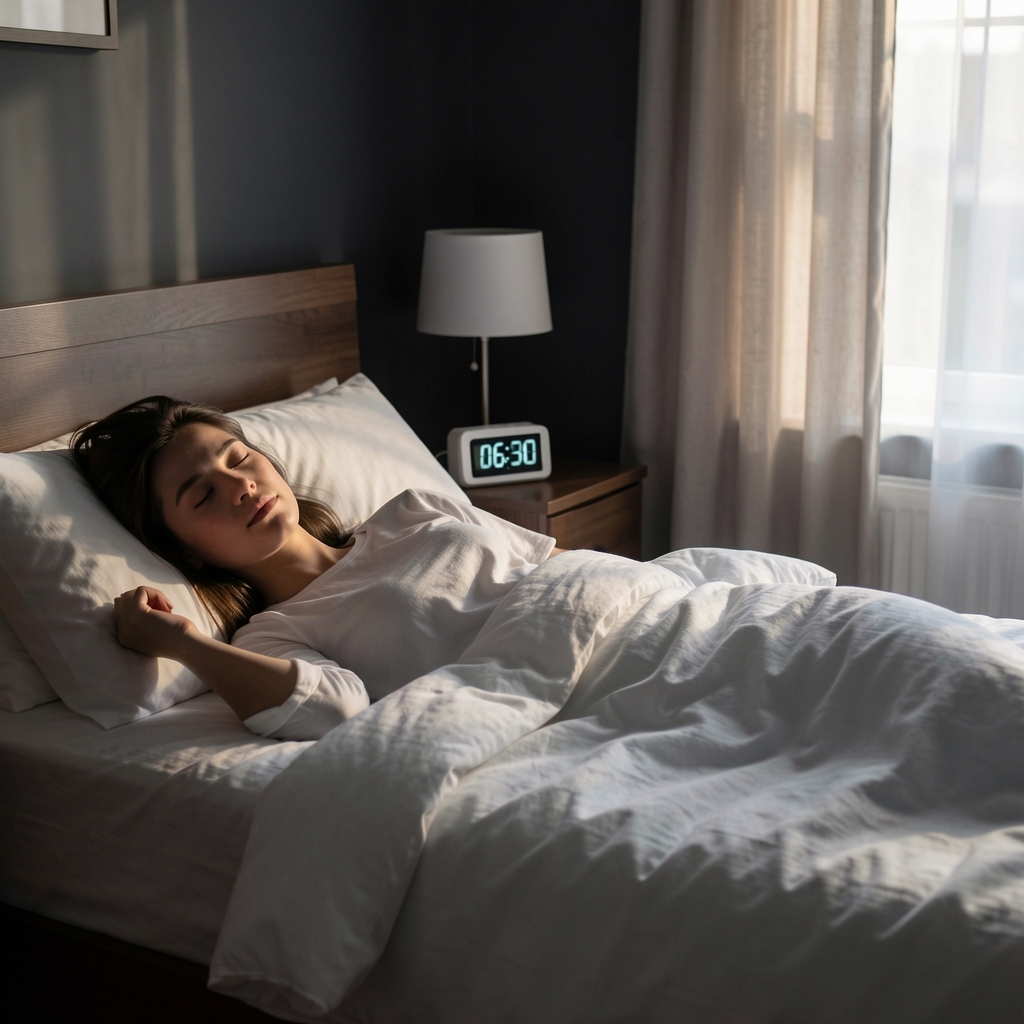
Quiet bedroom at dusk with warm lamplight, notebook on bedside table, soft linen textures visible in foreground
fig. 01 — Evening wind-down study 2026
GOLNEV ALMANAC
◆ SLEEP ARCHITECTURE · CIRCADIAN TIMING · ◆ ENERGY BALANCE · BODY COMPOSITION · ◆ BEDTIME WINDOW · RECOVERY NIGHT · ◆ HABIT AUDIT · WAKE RHYTHM · ◆ SLEEP ARCHITECTURE · CIRCADIAN TIMING · ◆ ENERGY BALANCE · BODY COMPOSITION · ◆ BEDTIME WINDOW · RECOVERY NIGHT · ◆ HABIT AUDIT · WAKE RHYTHM ·
01

Editorial Introduction — January 2026

There is a quiet logic to how the body organises itself across a night.

The relationship between sleep and body composition has accumulated a body of published observation that rarely makes its way into accessible editorial form. Golnev Almanac was begun with the intention of changing that — not by simplifying the research into instructional steps, but by sitting with the nuance of what the field actually says.

What follows across these pages is an attempt at honest documentation: the kind of writing that acknowledges complexity, respects the reader's intelligence, and resists the language of quick results. Sleep, metabolism, and the gradual arc of body composition form a system — and systems deserve careful observation.

Editorial Standards
02

Featured Reading

03

The Topics We Trace

Sleep Architecture

The observable structure of overnight rest — slow-wave, REM, and the transitional stages — as it relates to morning energy readiness and daily metabolism.

FIELD NOTES →

Circadian Timing

How the body's internal clock governs appetite, energy expenditure, and the timing of nutrient absorption across the twenty-four-hour cycle.

FIELD NOTES →

Energy Balance

The relationship between restorative sleep, daytime activity, and the gradual arc of body composition — documented through a slow, observation-led lens.

FIELD NOTES →

Mindful Eating Habits

Observations on how evening food choices interact with overnight recovery, and what the long-term tracking of portion awareness reveals about habitual patterns.

FIELD NOTES →

Daily Movement Balance

The interplay of structured exercise, incidental movement, and adequate rest — particularly as rest-day logic and recovery night practices shape the following week.

FIELD NOTES →

Long-Term Habit Tracking

From accountability rhythm to check-in cadence: how systematic documentation of sleep hygiene and daily movement informs the coach perspective over months, not weeks.

FIELD NOTES →
Black and white portrait of a person seated at a desk writing in a journal, a single window casting natural directional light across the scene

fig. 03 — Session notes, London 2026

────────────────────────────────────
“The slow approach does not mean the passive approach. It means trusting the accumulation of small, consistent decisions over the noise of urgent interventions.”
Golnev Almanac — Editorial Standpoint
04

Questions from the Field

Recurring questions gathered through reader correspondence and coach session observations. Answered in the editorial register of this publication.

Published sleep research has repeatedly documented associations between shortened or fragmented overnight rest and shifts in appetite-related signalling. The observation is consistent enough across studies that it forms a standard premise in the field. What remains less settled is the precise mechanism — which is part of what makes ongoing observation interesting.

In the coach perspective documented through this publication, a consistent sleep schedule means reaching the bedtime window within roughly the same thirty-minute band on most nights of the week — including weekends. The specifics of that window are less important than the regularity. The wake rhythm is, if anything, more important to hold consistent than the sleep onset time.

Long-term tracking across client patterns suggests that an evening wind-down routine — one that dims light exposure, reduces stimulation, and narrows the window for late eating — is associated with more measured morning food choices. The observation is correlational rather than causal, but it appears with enough consistency in session notes to warrant its own section in our field observations.

Golnev Almanac is written for readers who are already engaged with their wellbeing and are interested in a more considered, slower-paced perspective on the sleep-body composition relationship. It is not a crisis resource; it is an ongoing editorial observation for those who find value in depth over speed.

Articles draw on published nutritional and sleep research, long-term field observations from professional wellness practice, and correspondence with readers. All sourcing is noted within articles where it is primary. The methodology page provides a full account of editorial standards.

05
About this publication

An almanac, not a manual.

Golnev Almanac was founded in London by a wellness professional with over seven years of one-to-one coaching experience. The publication emerged from a persistent observation: that the most durable changes in body composition in client practice were associated not with particular programmes, but with the underlying quality and regularity of sleep.

The almanac format was chosen deliberately. Where a manual prescribes, an almanac documents. The seasonal, record-keeping character of the form suits an area of practice where the passage of time — weeks and months of consistent observation — is itself the active ingredient.

Warm-lit editorial office interior with bookshelves filled with reference volumes on nutrition and sleep science, a writing desk with papers and a vintage lamp